Yield Comparison: Villas, Apartments, and Townhouses in Bali
Bali's real estate market continues its active development in 2025, becoming increasingly segmented. While most investors previously focused on purchasing villas, today the market offers a much wider array of formats: from compact apartments to multi-level townhouses. Each boasts unique advantages, management specifics, and an investment model. Your choice depends not only on your budget but also on your goals: maximizing yield, capital appreciation, ease of management, and your target rental audience.
In this article, we'll thoroughly examine the pros and cons of each property format, helping you assess the real prospects and risks of investing in 2025.

Villas in Bali : The Individual Format for the Premium Segment
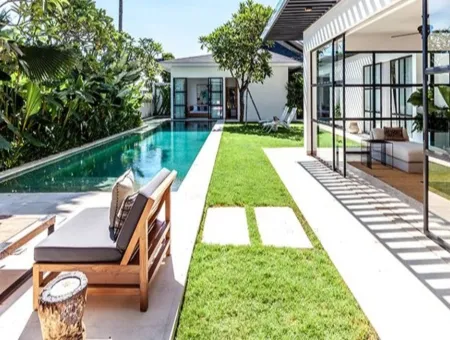
A villa is a property with a fully autonomous structure: a private entrance, its own territory, a swimming pool, parking, and landscaping. In Bali's premium areas, such as Uluwatu, Berawa, Pererenan, or Umalas, high-quality villas enjoy consistent demand among tourists traveling in groups or with families.
The main advantage of villas is their high average daily rate. Due to their large size, privacy, and architectural quality, villas can be rented short-term for $300–800 per night and higher, especially during peak season. This makes them attractive to investors focused on high income per unit.
However, entering the villa segment in 2025 requires significantly more preparation: both financial and managerial. Construction or purchase prices start from $300,000 and can go higher. Substantial ongoing expenses include maintenance for the pool, garden, regular cleaning, repairs, and staff (housekeepers, security). Furthermore, without a professional management company, operating a villa efficiently is extremely challenging.
Considering seasonality, lower secondary market liquidity, and a more limited tenant pool, villas are best suited for investors prepared for active management, possessing a large budget, and aiming for a long-term strategy with an emphasis on capital appreciation.
Apartments in Bali : Optimized Income and Minimal Involvement
Apartments are currently the primary entry format into the Bali market for most foreign investors. Studios and one-bedroom apartments within apart-hotels or serviced residential complexes are particularly in demand. Amidst the growing influx of digital nomads, young travelers (couples or solo), and budget tourists, this format demonstrates consistently high occupancy rates.
Key advantages of apartments include a low entry threshold (from $80,000), a straightforward management structure, and high liquidity. Unlike villas, these properties are often acquired with an already engaged management company that handles the entire operational cycle: marketing, bookings, check-ins, cleaning, maintenance, and reporting. This makes the format especially appealing for passive investors.
Profitability, with good location and service, can reach 13–16% annually. This level of return is driven by high turnover and low operating costs. Given the rising demand for short-term rentals in new residential complexes with integrated infrastructure (co-working spaces, gyms, pools, lounge areas), apartments in 2025 appear to be the most balanced investment tool.
Townhouses in Bali : A Format Blending Short-Term and Long-Term Strategy
Townhouses occupy an intermediate position between apartments and villas in terms of both cost and ownership format. Architecturally, they are two-story homes with their own entrance, a terrace or small courtyard, sometimes even a jacuzzi or a compact pool. They cater to tenants seeking more space than a standard apartment but not the complete isolation of a villa.
This format is actively developing in Bali's second investment tier areas, such as Pererenan, North Bukit, and Sukawati. It's becoming particularly relevant given the demand from expats, remote professionals, and families looking for accommodation for several months to a year.
From an investor's perspective, a townhouse offers a more flexible income model: it can be rented out on a daily basis (with appropriate licenses) or for longer terms, especially during the off-season. Entry costs typically range from $120,000 to $200,000, with annual yields in the 11–15% range, depending on location, architectural quality, and management effectiveness.
The main challenge is a lack of standardization: projects vary significantly in terms of finish quality, density, and management models. Therefore, when choosing a townhouse, it's critically important to research the developer's reputation and operational terms.

What to Choose as an Investor in 2025?
The choice between a villa, an apartment, and a townhouse depends on several factors:
- Capital Size: Apartments – from $80K; Townhouses – from $120K; Villas – from $300K.
- Investment Goal: Yield, capital appreciation, personal use.
- Willingness to Manage: How involved are you willing to be, or will you delegate?
- Rental Strategy: Short-term, hybrid, or long-term rentals.
- Location: A critical parameter determining both income and liquidity.
Amidst increasing competition, stricter short-term rental regulations, and higher demands on developers, investors who choose not only a profitable price but also a manageable, clear format with transparent operations will gain an advantage in 2025.
Conclusion:
- Apartments are the best choice for those seeking passive income and high occupancy with minimal involvement.
- Villas are for experienced investors with larger budgets and a focus on the premium segment.
- Townhouses are for those who want to combine scalability, space, and versatility.
Thorough location analysis, understanding the product, and choosing a reliable partner are three key conditions for a successful investment in Bali in the coming years.
Other Posts
 24 SepBali — The Capital of Off-Plan Real EstateBali is one of the most profitable destinations for off-plan real estate in 2025.Read More
 15 SepTop 5 Districts for Real Estate Investment in BaliDiscover which areas of Bali offer the highest potential for rental income, comfort, and capital growth.Read More
 10 JulLegal Guide to Buying Off-Plan Property in BaliLearn the legal aspects of investing in off-plan property in Bali: leasehold vs freehold, PT PMA setup, taxes, licenses, and how due diligence reduces risks.Read More
 11 MayHow to Choose a Reliable Developer in BaliA step-by-step guide to selecting a developer in Bali: how to check licenses, land legal status, documents, experience, construction quality, and avoid risks.Read More